In sheet metal processing, the quality of deburring and edge rounding depends not only on the machine but—just as critically—on the abrasives you choose. The right combination of abrasive characteristics can dramatically improve surface finish, throughput, and tool life, while the wrong choice leads to inconsistent results, excessive wear, and higher unit costs.
This guide breaks down the six key factors that define abrasive performance in deburring and edge rounding, with material‑specific recommendations and practical selection rules.
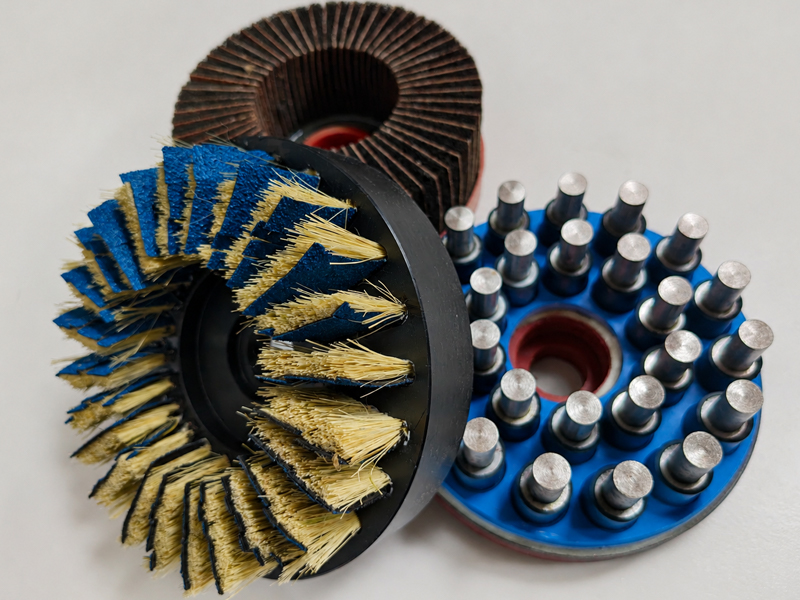
1. Grit Type – Match the Mineral to the Material
The abrasive grain (mineral) applied to the backing material is the primary cutting agent. Synthetic grit types dominate industrial deburring. Here is the material‑specific guideline:
Pro tip: For mixed-material job shops, aluminum oxide offers a safe starting point, but for dedicated stainless or aluminum work, ceramic and silicon carbide respectively deliver superior ROI.
2. Grit Size – Coarse for Deburring, Fine for Finishing
Typical grit sizes for sheet metal deburring range from 40 to 180. The rule is straightforward:
Larger grit numbers (e.g., 40–80) → aggressive, coarse abrasion → ideal for heavy burr removal and strong edge rounding.
Smaller grit numbers (e.g., 120–180) → finer abrasion → produce smoother surfaces; used for final finishing or when minimal material removal is required.
For surface finishing (beyond deburring), grit sizes above 180 are common, but for most deburring operations, stay within the 40–180 window and select based on your target edge radius and surface roughness (Ra) requirements.
3. Abrasive Cloth – Flexibility Depends on Sheet Thickness
Unlike paper‑based abrasives, industrial deburring tools use cloth backing—more robust, tear‑resistant, and durable.
Thick sheets (>3 mm) → require stiffer, heavy‑duty cloth to withstand high pressure and maintain grain orientation.
Thin sheets (<1.5 mm) → demand flexible cloth that conforms to the sheet surface, preventing gouging or distortion.
The cloth type also interacts with grit size: coarse grits on rigid cloth for heavy stock removal; fine grits on flexible cloth for delicate edges.
4. Abrasive Shape – Flap Width and Contour Access
The physical shape of the abrasive (e.g., flaps, discs, or blocks) directly affects removal rate and edge accessibility:
Narrow flaps – better penetration into inner contours, cut‑outs, and complex geometries.
Wide flaps – higher removal rate on long, straight edges (ideal for large panels).
Flap slitting (thickness and pattern) – further tunes aggression and surface finish.
Contact angle – the angle at which the abrasive hits the edge also influences removal; steeper angles increase cut but may reduce finish quality.
Choose flap geometry based on your part complexity: intricate parts favor narrow, closely spaced flaps; simple rectangular parts benefit from wider, more aggressive flaps.
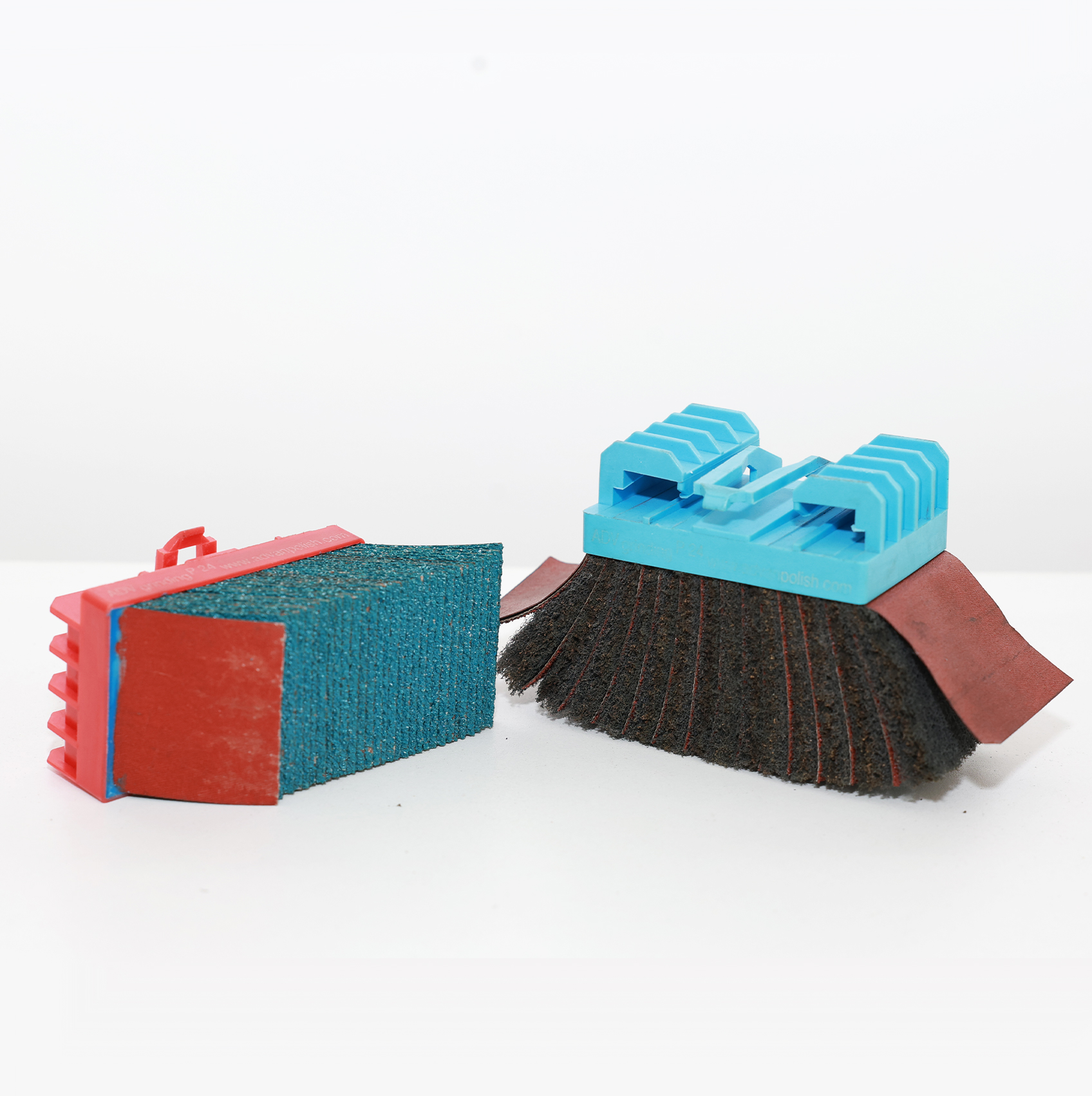
5. Abrasive Fleece – The Support Layer for Rounding
Abrasive fleece consists of synthetic fibers impregnated with abrasive grain. It serves two purposes:
Provides additional removal during edge rounding.
Supports and stabilizes individual abrasive cloths in disc tools or rounding blocks, ensuring uniform pressure distribution.
The fleece‑to‑cloth ratio determines the tool’s “softness” and its ability to produce consistent, radiused edges without undercutting or scalloping. For heavy rounding, a higher fleece content is often preferred.
6. Fill Types – Arrangement of Abrasives in the Tool
“Fill type” refers to the layout pattern of abrasives within the tool (e.g., single‑row vs. multi‑row disc tools, or helical vs. radial arrangements).
Multi‑row fills → produce more even, vibration‑free sanding results across the entire edge.
Fill density and angle – can be varied to adjust cutting pressure and finish. Higher density increases removal but may reduce chip clearance.
For automated deburring stations, multi‑row tools with optimized fill angles deliver the best balance of throughput and consistency.
Summary Decision Table – Choose Your Abrasive Combination
Conclusion – The Right Combination Drives Quality and Profitability
Deburring and edge‑rounding tools are defined by six interdependent factors: grit type, grit size, cloth type, abrasive shape, fleece content, and fill arrangement. No single factor works in isolation.
For steel, prioritize zirconium or ceramic grits.
For stainless, ceramic is your best bet.
For aluminum, silicon carbide is non‑negotiable.
Use coarse grits for aggressive deburring, fine grits for finishing.
Match cloth flexibility to sheet thickness, and select flap geometry and fill based on part geometry.
When these elements are optimally tuned, machine deburring outperforms manual processes in speed, consistency, and cost‑per‑part. To maximise ROI, always test abrasives on your actual parts—preferably with a supplier who can run trials, measure unit costs, and recommend the exact tool‑machine pairing for your production environment.