Plasma cutting is a go-to method for fast, efficient metal cutting, especially on thick materials. However, it often leaves behind a stubborn byproduct: heavy slag (also called dross) fused to the bottom edge of the cut. If not removed properly, this slag can compromise the quality of bends, welds, coatings, and automated downstream processes. This guide explains what heavy slag is, why it must be removed, and the most effective, non-destructive methods for doing so at scale.
During plasma cutting, a high-velocity jet of ionized gas melts the metal and blows it away from the kerf. When cutting parameters—such as speed, amperage, torch height, or gas flow—are not optimal, some molten metal fails to clear the cut zone and re-solidifies along the edge. This forms:
Hardened, bead-like deposits
Fused slag ridges
Irregular, difficult-to-grind material
On thick plate, slag can be substantial and too tenacious for economical removal by grinding alone.
Why Removing Heavy Slag Is Critical
Leaving slag in place leads to multiple production issues:
Tooling Damage: Slag acts like abrasive stone, wearing down press brake tools, rollers, and leveling equipment.
Feeding Problems: Irregular edges cause misfeeds in conveyors, backgauges, and automated loaders.
Coating Defects: Paint or powder coating cannot adhere evenly to slagged edges, leading to premature corrosion or finish failure.
Welding Issues: Slag and oxidized surfaces on cut edges result in poor weld quality and inconsistency.
The Limits of Manual Slag Removal
Manual methods—using chisels, hammers, or angle grinders—are sometimes used for small batches or repair work. However, they are:
Labor-intensive and slow
Inconsistent across operators
Prone to causing surface damage, gouges, or over-grinding
Not scalable for production environments
Automated Heavy Slag Removal: The Industry-Standard Approach
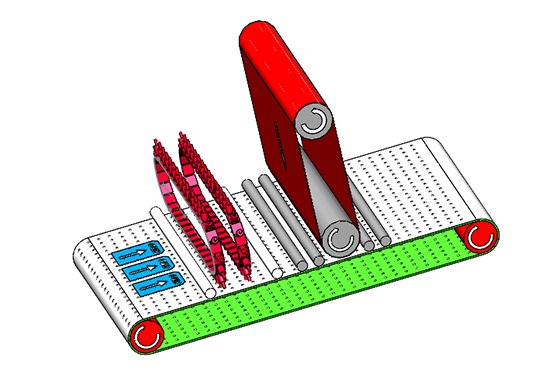
To achieve consistent, efficient, and part-safe slag removal, fabricators rely on multi-stage automated systems. The typical workflow includes:
1. Impact Deslagging (Slag Hammer)
A rotating drum fitted with hardened steel pins strikes the cut edge, mechanically breaking off the bulk of the slag without grinding into the base material. This step removes the majority of heavy deposits with minimal heat and abrasive wear.
After impact removal, an abrasive belt cleans residual slag, smooths the edge, and levels any high spots. Because the heavy slag is already gone, the belt works efficiently and lasts longer.
For applications requiring edge rounding, improved coating adhesion, or a uniform surface finish, a rotary brush stage can be added. This provides controlled edge preparation and a non-directional surface texture.
This Impact → Grind → Brush sequence is proven to protect part integrity while delivering repeatable results across high volumes.
Key Features of an Effective Slag Removal System
When selecting equipment, look for:
Heavy-duty impact head for fused slag
Abrasive belt drum for fine finishing
Optional rotary brushes for edge preparation
Secure part retention (magnetic or vacuum)
Adjustable feed speed for different materials and thicknesses
Frequently Asked Questions
1. Can automated slag removal damage my parts?
When properly set up, automated systems are designed to target slag without damaging the base material. Impact pins break off slag, while subsequent stages use minimal pressure.
2. Is it better to grind or break off slag mechanically?
Mechanical breakage is preferred. Grinding heavy slag directly is inefficient, consumes abrasives quickly, and risks part damage.
3. What materials can be processed?
Carbon steel, stainless steel, and mild steel are commonly processed. Magnetic holding works for ferrous metals; vacuum retention suits non-ferrous materials.
4. Can one machine handle both slag removal and deburring?
Yes. Many multi-stage systems combine impact deslagging, abrasive grinding, and brushing for complete edge finishing in a single pass.
Conclusion
Heavy slag removal is a critical step in metal fabrication that directly affects downstream quality and efficiency. While manual methods are feasible for small-scale work, automated multi-stage systems offer the most reliable, consistent, and part-safe solution for production environments. By adopting a systematic approach—impact deslagging followed by abrasive and brush finishing—shops can achieve cleaner edges, reduce labor costs, minimize abrasive waste, and ensure better outcomes for bending, welding, and coating processes.
More Imformation : HEAVY SLAGE REMOVAL