Heavy slag (commonly referred to as dross) represents one of the most significant bottlenecks in metal fabrication. When you fire up a plasma cutter or oxy-fuel torch on thick, high-strength steel, the intense heat melts the metal, only for it to solidify instantly into stubborn, abrasive crusts clinging to the part.
If left unaddressed, this metal slag scratches downstream equipment, dulls tooling, and causes misfeeds. While manual chipping and grinding have been the "standard" for decades, the industry is shifting toward automatic deslagging machines that offer speed, consistency, and safety.
This guide explores the technical nature of heavy slag, the drawbacks of traditional removal, and the mechanical solutions designed to eliminate dross in a single pass.
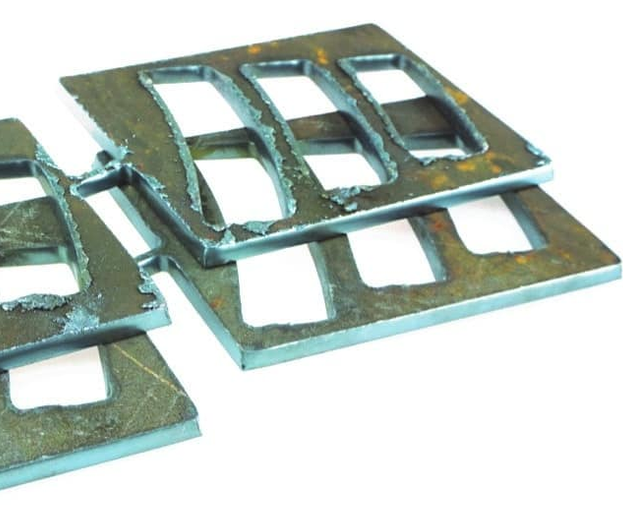
Slag, also referred to as dross, describes the metal residuals that are melted and re-solidified during thermal cutting operations (plasma or oxy-fuel). It is essentially a "stony waste piece" formed during the metal melting process, accumulating as molten steel solidifies at the cutting edges.
Why Does Heavy Slag Form?
Intense Heat and Rapid Cooling: Plasma and oxy-fuel cutting concentrate extreme energy into the kerf. Molten metal is ejected, cooling almost instantly in ambient air to form irregular chunks.
Alloy Chemistry: Certain materials exacerbate slag formation:
Stainless Steel: High silicon or manganese content generates slag that bonds tightly.
High-Strength Steel: Alloying elements often produce thicker dross plugs.
Aluminum: Leaves a softer residue, but still requires removal for precision edge finishing.
The Impact of Unchecked Slag on Production
Ignoring heavy slag isn't just a cosmetic issue; it actively destroys production efficiency:
Roller Damage: Sharp chunks gouge leveling and feed rollers.
Tool Wear: Burrs act like abrasive stones on punch and bending dies.
Misfeeds & Jams: Slag tangles in conveyors, causing unplanned downtime.
Quality Rejections: Parts fail edge-finish specifications, risking damage to coating lines.
Traditional Slag-Removal Methods vs. Automated Deslagging
For decades, operators have relied on manual methods to remove dross. However, as fabrication volumes increase, these methods are proving to be high-cost bottlenecks.
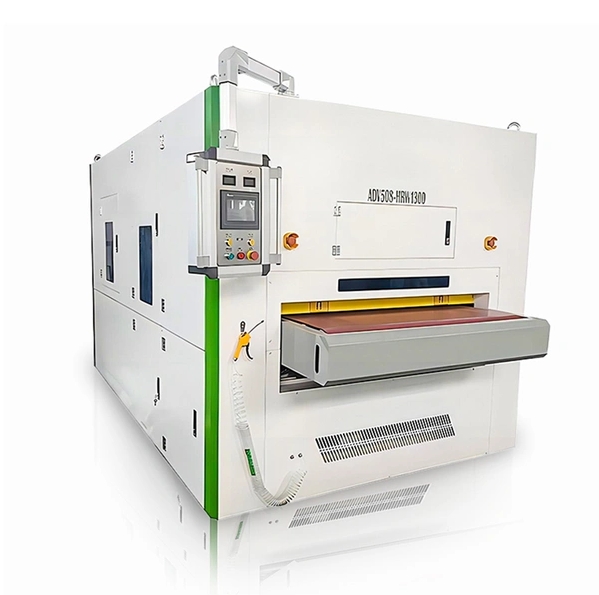
The Solution: A dedicated deslagging machine, like the Timesavers Hammerhead, automates this process. It uses a controlled hammer action to fracture and dislodge dross, ensuring repeatable results without operator fatigue.
How Automatic Deslagging Machines Work
Modern automatic deslagging machines utilize a specialized head that removes heavy slag in a single pass. Here is the technical breakdown of the most effective systems:
The "Hammerhead" Mechanism
The most innovative solution involves a series of steel pins vulcanized in rubber, mounted in rows on slides. This design ensures that:
Full Coverage: The pins are slightly staggered, ensuring the part is hit by at least one pin.
Controlled Force: The impact force is servo-driven and programmable, allowing it to be tough enough for thick steel slag yet gentle enough to avoid damaging the base material.
Dual-Sided Removal: Simultaneous slag removal on both sides of a part saves the heavy, risky task of turning over large components.
One of the most significant technical advancements is the ability to combine heavy slag removal with edge rounding in the same pass. This integration:
Ensures high-quality, burr-free edges.
Eliminates the need for secondary finishing stations.
Prepares parts directly for assembly or painting.
Key Features to Look for in a Deslagging Machine
When selecting a deslagging machine for your shop, technical specifications matter more than horsepower. Focus on these critical features:
Adjustable Impact Profile: The machine must adjust on-the-fly. Hardened stainless steel requires high hammer energy; aluminum requires a lighter touch.
Continuous Conveyor Feed: The machine should integrate seamlessly into an existing deburring or leveling line. Parts should move via conveyor from cutting to slag removal to finishing without manual transfer.
Visible Processing Quality: Look for consistent hammer patterns and force execution to maintain a uniformly high edge quality across thousands of parts.
Ergonomics & Safety: Automated deslagging reduces the repetitive strain injuries associated with hand-held chipping.
How to Choose the Right Deslagging Machine for Your Shop
Choosing the right machine depends on your specific fabrication environment. Use this technical checklist to guide your decision:
1. Throughput Requirements
Low Volume (<30 parts/hr): A smaller inline unit or stand-alone model.
Medium Volume (30–100 parts/hr): Mid-range machine with a moderate-duty hammer.
High Volume (>100 parts/hr): Heavy-duty model with multiple hammer heads and rapid-fire cycles.
2. Part Dimensions & Geometry
Large Panels (>1 m width): Ensure the machine has adjustable stroke length or multiple hammers to cover the full edge in one pass.
Complex Profiles: Opt for a machine with a swing-arm or adjustable head angle.
3. Material Compatibility
Integration into Your Production Line
To maximize ROI, the deslagging machine should be positioned strategically within your workflow:
Upstream: Place immediately after the deburring or beveling station.
Conveyor Layout: Use a single continuous belt to minimize manual handling.
Speed Matching: Sync the line speed so each part receives 3–5 taps per foot of edge—the optimal rate for clean removal.
Downstream: Route cleaned parts directly to assembly, painting, or packaging—eliminating the need for reinspection.
Real-World Impact: A Case Study
To put this into perspective, consider the processing of 10 mm-thick 304 stainless panels (1 m x 2 m) :
The Savings:
Labour: Reduced from 15 man-hours to 0.5 man-hours per 100 panels.
Throughput: 6 times faster processing.
Rework: 20 times fewer rejects, virtually eliminating downstream scrap.
Conclusion
Heavy slag on thick or high-alloy metal sheets no longer has to be a labor-intensive bottleneck. By installing an automatic deslagging machine with a programmable slag-cleanup hammer station, you can:
Eliminate manual chiseling and grinding.
Protect downstream equipment from scratches and jams.
Achieve uniform edge quality across all batches and operators.
Slash labor costs and rework expenses.
Automating the deslagging process is not just an upgrade to your equipment—it is an upgrade to the entire quality and efficiency of your metal fabrication workflow.
Ready to see it in action? Visit our heavy slag removal page and choose the right machine for your operation.(Click : https://www.advgrinding.com/heavy-slage-removal_l32854_o.html)