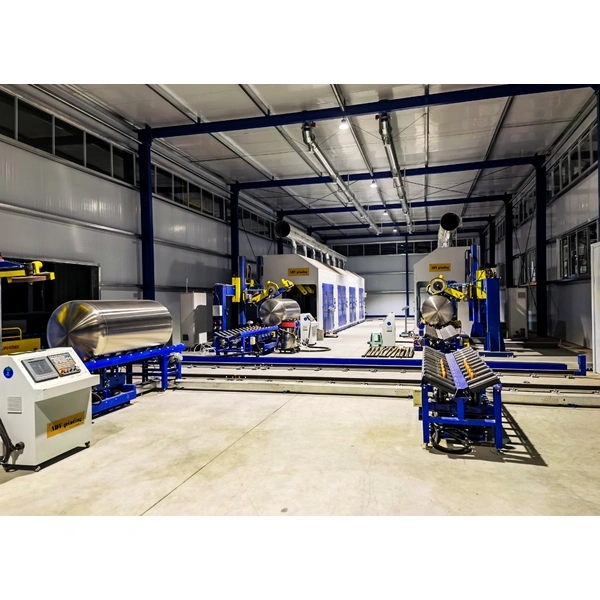
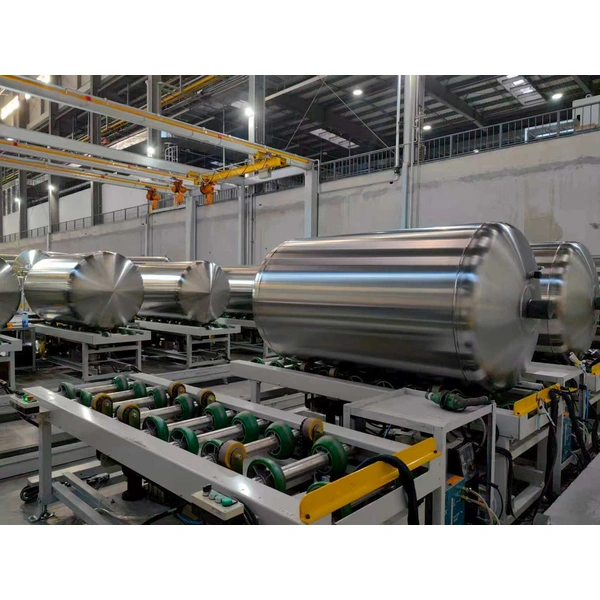
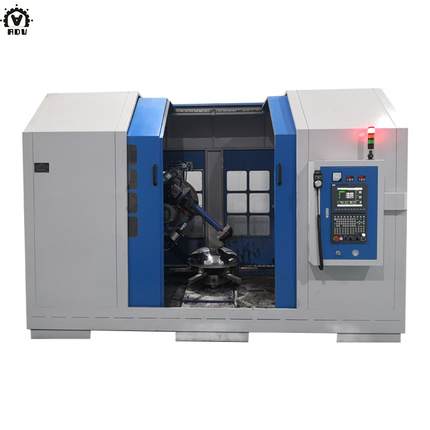
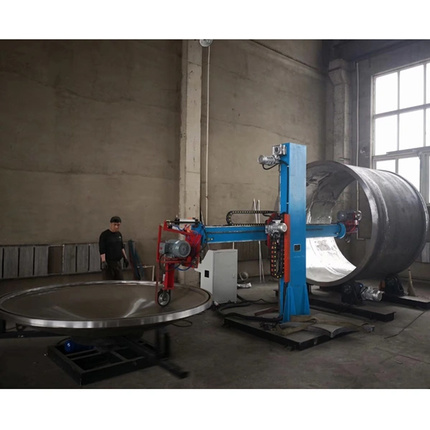
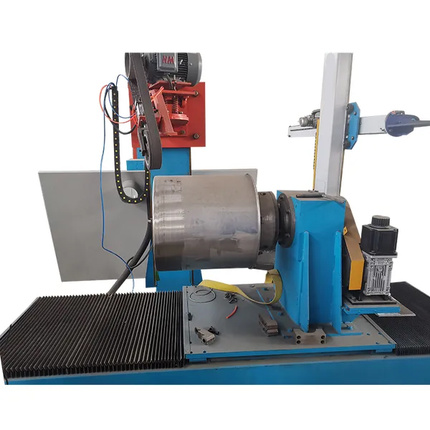
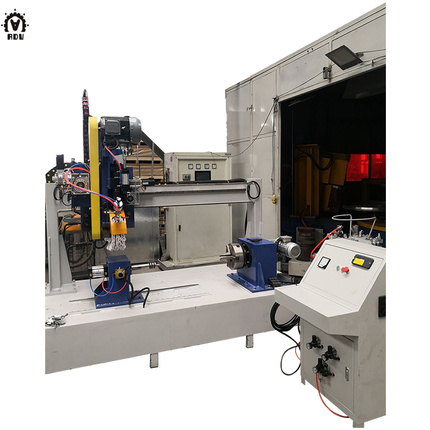
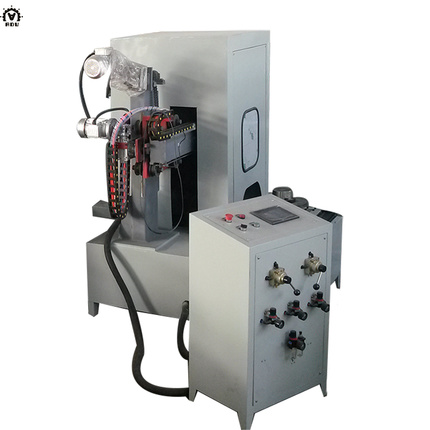
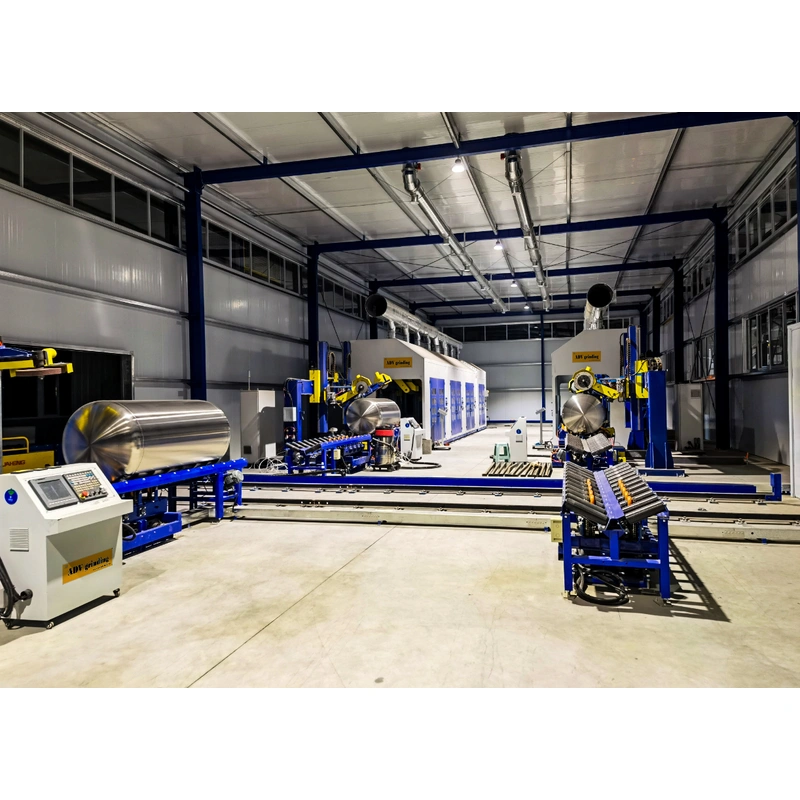
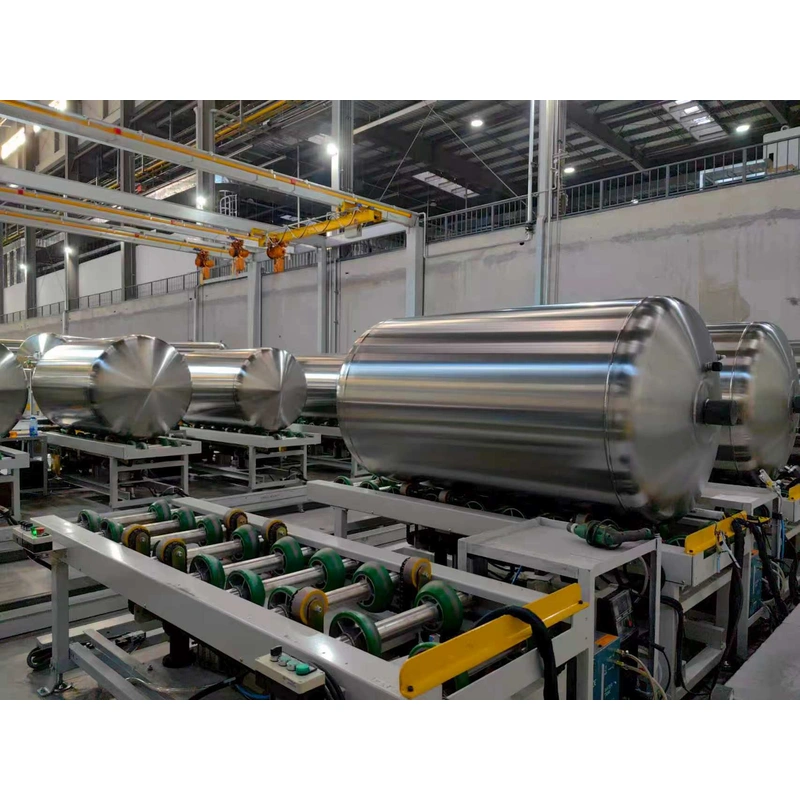
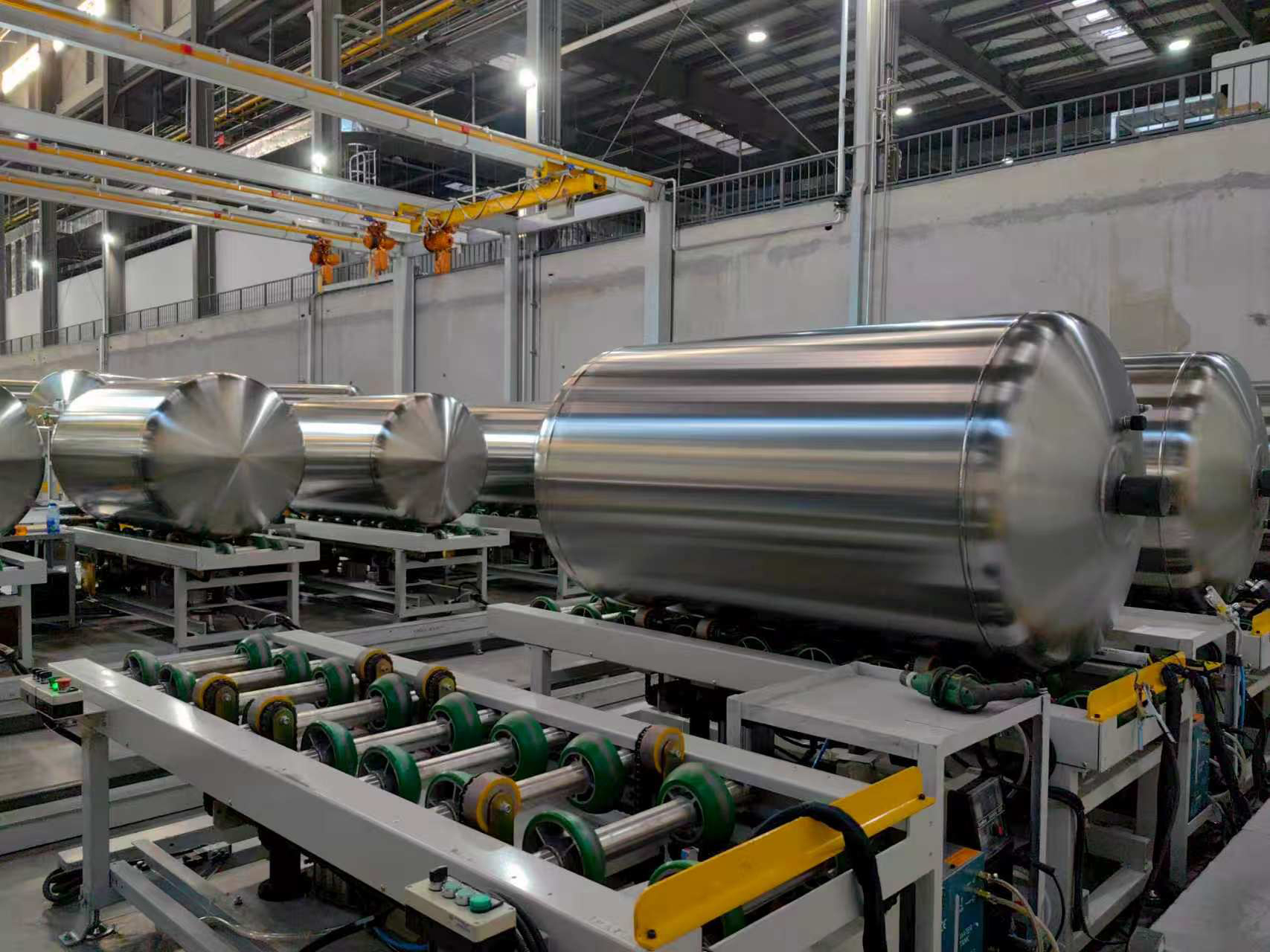
The LNG Through-Type Polishing Machine is an automatic surface finishing system designed for external polishing of LNG cylinder shells. Integrated seamlessly with a conveying line, the cylinders are automatically loaded into the machine, where horizontal spiral feed ensures continuous polishing. Equipped with constant-pressure polishing heads, motorized screw lift adjustments, and sealed dust-control enclosures, this system delivers high-speed, high-precision surface finishing for a wide range of cylinder diameters.
Achievable Specifications
Machine Working Environment Requirements
FAQ (about CNC LNG POLISHING MACHINE)
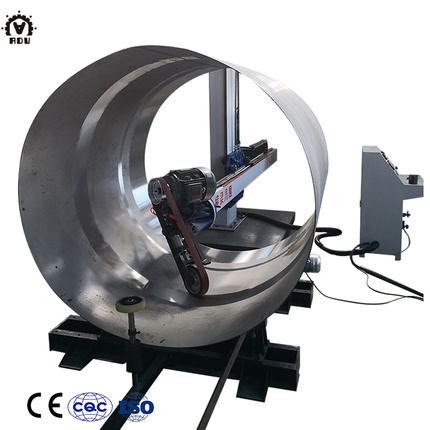
1. How to polish/grind the girth weld?
On the LNG polishing machine control interface, the LNG cylinder barrel model is entered. The control system receives the signal and executes the designated program. When the automatic program is started, the workpiece advances linearly on the conveying rollers and stops upon reaching the axial positioning position. The linear workpiece transport mechanism then lowers, and the workpiece rotates while performing axial movement. The grinding head, which has already reached its working position, begins grinding the girth weld. After grinding is completed, the grinding head moves away from the girth weld grinding position, and the workpiece advances to the outer diameter (OD) surface grinding station. Once the finished workpiece has completely cleared the station, the next workpiece to be ground enters, and the above process is repeated. The control panel is equipped with an emergency stop switch.
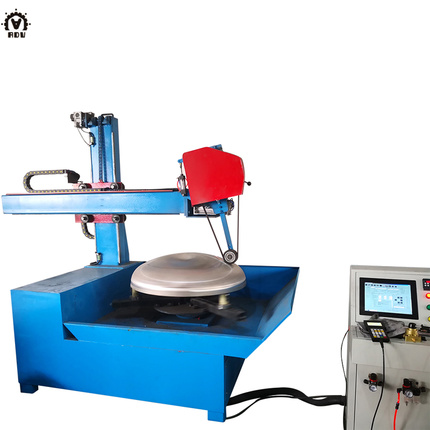
2. How to Polish/Grind Dished End ?
Double‑Head CNC Dome End Polishing Machine
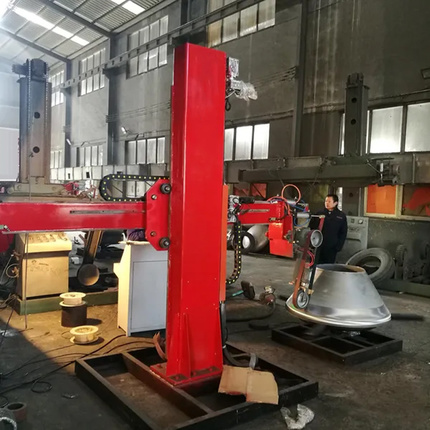
This equipment mainly consists of: 2 groups of grinding heads, 2 groups of grinding‑head lifting feed systems, 2 groups of grinding‑head horizontal feed systems, 2 groups of grinding‑head tilting/rotating systems, 1 workpiece rotation system, 1 rubber‑wheel distance adjustment mechanism (adjusting along the workpiece diameter direction), 1 workpiece linear conveying system, 1 workpiece axial positioning system, 1 lifting system for the workpiece linear conveying system, 1 machine frame, 1 pneumatic system, and 1 electrical control and operating system.
Process Flow Description:
The product model is entered on the human‑machine control interface. The control system receives the signal and executes the designated program. After the start button is pressed, the workpiece advances linearly on the conveying rollers and stops upon reaching the axial positioning position. The workpiece linear conveying system then lowers, and the workpiece rotates. The grinding heads, which have already reached their working positions, begin polishing the dome ends. After polishing is completed, the workpiece axial positioning system retracts, and the workpiece linear conveying system rises to move the finished workpiece linearly out of the working position and into the finished‑product area. The next workpiece to be polished then enters, and the above process is repeated. The control panel is equipped with an emergency stop switch.
Function and Structure of the Grinding Heads
Based on the workpiece shape, quality requirements, and process characteristics, we select grinding wheels as the abrasive medium. The function of the grinding head is to support the abrasive belt and drive the grinding wheel to rotate at high speed. The grinding‑head motor transmits power directly to the grinding wheel via an aluminium pulley, and the grinding wheel polishes the workpiece. The grinding head is equipped with an adaptive constant‑pressure floating function. After the grinding stroke is completed, the grinding head is automatically lifted, and the grinding wheel leaves the workpiece surface.
Grinding‑Head Lifting Feed and Grinding‑Head Control System
This system provides the vertical position movement required for polishing the outer cylindrical surfaces of dome ends with different diameters. It consists of a base, columns, guide rails, reducers, and servo motors. The grinding head, mounting base, columns, and guide rails are all designed with sufficient rigidity to ensure stability during grinding‑head operation. The horizontal feed, lifting, and lowering of the grinding head are automatic functions. The system also takes into account ease of maintenance: the grinding head must be equipped with comprehensive anti‑collision protection, with the basic requirement of dual protection by photoelectric detection and limit switches, supplemented by mechanical dead stops and anti‑impact damping.
Workpiece Linear Conveying System
The function of this system is to transport the workpiece linearly to the grinding‑head working position. It is mainly composed of square tubes, channel steel, rubber wheels, a pneumatic system, a geared motor, and mechanical mechanisms. The system must place special emphasis on structural strength, lifting stability, dust protection for moving parts, and dual protection at the stop position by photoelectric detection and limit switches, supplemented by mechanical stops.
3.How to Polish/Grind Tank Surface?
Equipment Composition, Structure, Function
The equipment adopts a through‑feed configuration with 5 workstations and 10 grinding heads. It is designed for polishing the outer cylindrical surface of gas cylinder bodies and the straight edge of the domed ends. The main components include: 10 groups of grinding heads, 5 groups of grinding‑head lifting feed systems, 5 groups of workpiece linear conveying systems, 5 groups of workpiece rotation systems, 5 groups of rubber‑wheel distance adjustment mechanisms (for adjusting along the workpiece diameter direction), 1 machine frame, 1 set of sealing covers, 1 pneumatic system, and 1 electrical control and operating system (each workstation is equipped with an independent touch‑screen control, and the conveyor line has its own electrical control; failure of a single unit must not affect the conveyor line operation). All bolted connections are provided with anti‑loosening measures.
Process Flow Description:
A product‑specific recipe is recalled based on the cylinder model. All grinding heads are automatically calibrated to their standby positions. When the automatic working program is started, the workpiece linear conveying system delivers the workpiece to the first grinding head (belt) working position. Once the sensor installed at the first workstation detects that the workpiece has reached the working position, the rotating rubber wheels start to rotate, driving the workpiece to spin. The grinding head above the workpiece automatically lowers and moves axially along the workpiece to perform the polishing operation. After polishing is completed, the grinding head automatically lifts. When it reaches the specified lifted position, the workpiece is transferred by the linear conveying system to the next workstation. Upon receiving the completion signal from the next workstation, the current workstation calls for the next workpiece. The linear conveying system then transfers the workpiece from the previous station to this workstation. The second, and subsequently the n‑th workstation, perform polishing on the workpiece in sequence. When the second workpiece arrives, the grinding head repeats the above process.